


In June 2025, Food Standards Australia New Zealand (FSANZ) officially announced Australia’s first-ever approval of a cultivated meat product, opening up a potentially lucrative new market for the cellular agriculture sector.
Following a rigorous multi-year food safety assessment, FSANZ has given its blessing to cultivated quail, produced by Australian startup, Vow through its premium brand Forged. This is the same ingredient that previously debuted in Singapore in early 2024 after the company received market approval from the Singapore Food Agency. Since its initial launch, Vow says that it has served over 25,000 servings of Forged products. In May, the company passed a production milestone by producing more than 538kg of Japanese quail in a single harvest.
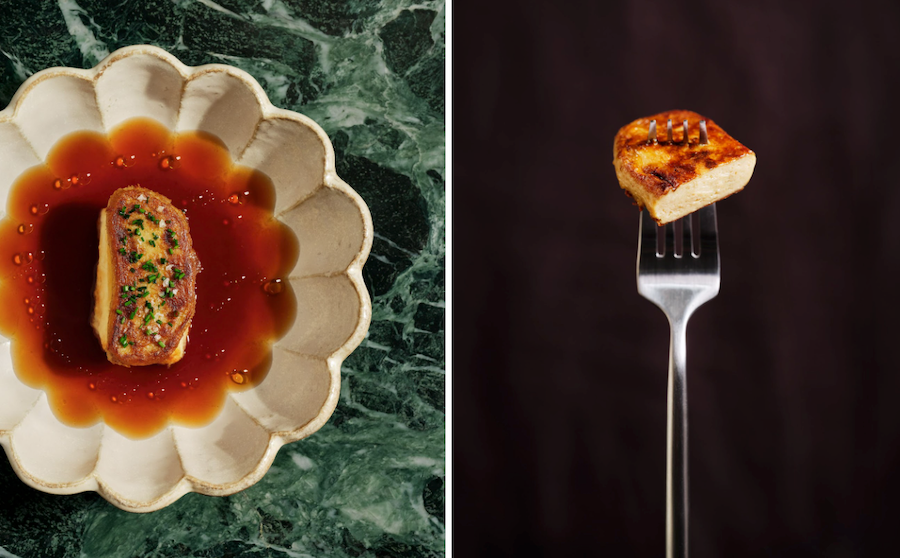
FSANZ—a shared entity with jurisdiction over both Australia and New Zealand* — has been impressively transparent in its review process, publishing its assessment results, public consultation feedback, and other content online for all to see. This approach is expected to increase consumer confidence and establish a useful template for other countries to follow. As part of the approval, the agency has also developed some category-wide requirements and guidance for cultivated meat producers, in addition to approving Vow’s application—a step towards bringing cultivated meat more in line with the standardised requirements of conventional food categories.
Now that Vow has secured domestic market approval, the company plans to launch sales in “dozens of Australia’s most exciting venues,” including acclaimed Sydney restaurant NEL and Italian outpost Bottarga in Melbourne.
Global meat production is projected to increase by more than 50% by 2050 compared with 2012, driven by a growing population and higher disposable incomes. Despite historically having lower total meat consumption than the West, Asia accounts for more than half of all protein consumption growth.
GFI APAC CEO Mirte Gosker said, “Sustainably satisfying rising meat demand will require scaling up additional forms of protein production that can complement the traditional farming methods Australia is renowned for. Meat has never been more popular, especially in Asian markets that import top-quality proteins from down under. The challenge is that conventional production methods are highly inefficient as we currently feed up to 100 calories to a cow to produce just one calorie of beef.” Australia’s embrace of cellular agriculture could enable food producers to sell health and delicious cultivated proteins through existing agricultural distribution networks. The alternative protein sector, comprising of cultivated, plant-based and fermented-based proteins, is projected to contribute significantly to Australia’s $13 billion protein market opportunity by 2030.
After Australia, other Asian countries might also follow in granting approval for cultivated meat as FSANZ provides an added assurance over the safety of cultivated meat. Countries to watch for include South Korea, Thailand and Malaysia which are in various stages of cultivated meat assessment. Middle Eastern countries like Saudi Arabia are also seriously assessing the commercial viability of cultivated meat as the product has already been granted as permissible for muslim consumption (excluding pork) subject to specific production criteria.
* Note: Although Australia and New Zealand share a food regulatory compliance system, they maintain separate biosecurity and import/export programmes.
