


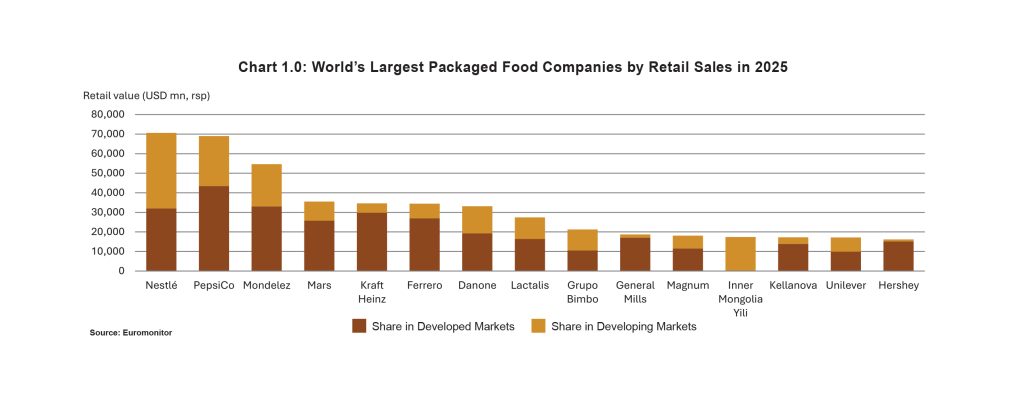
Towards the later half of the decade, the world witnessed the growing challenges faced by multinational food giants like Nestle and PepsiCo as they seek to dilute non-core assets and focus on more profitable niche and growing segments (See Chart 1.0 on the list of largest packaged food companies).
Some of their actions might seem extreme, for example Kellogg’s decision to spin off its North American cereal brands, as well as Nestle decision to dispose its global ice cream business to Froneri, signifying their global shift towards higher-growth categories. Meanwhile, Unilever continues to sell off some of its major food brands while it focuses more on its non-food assets.
At the same time, there is a growing lack of consumer trust over multinational brands with recent news of milk contamination as well as poor sustainability practices. Thai Union, the world’s largest producer of tuna was often accused of forced labor while Nestle and Danone faced negative publicity over the recent global recall of their infant formula due to potential contamination with cereulide, a toxin that can cause health issues.
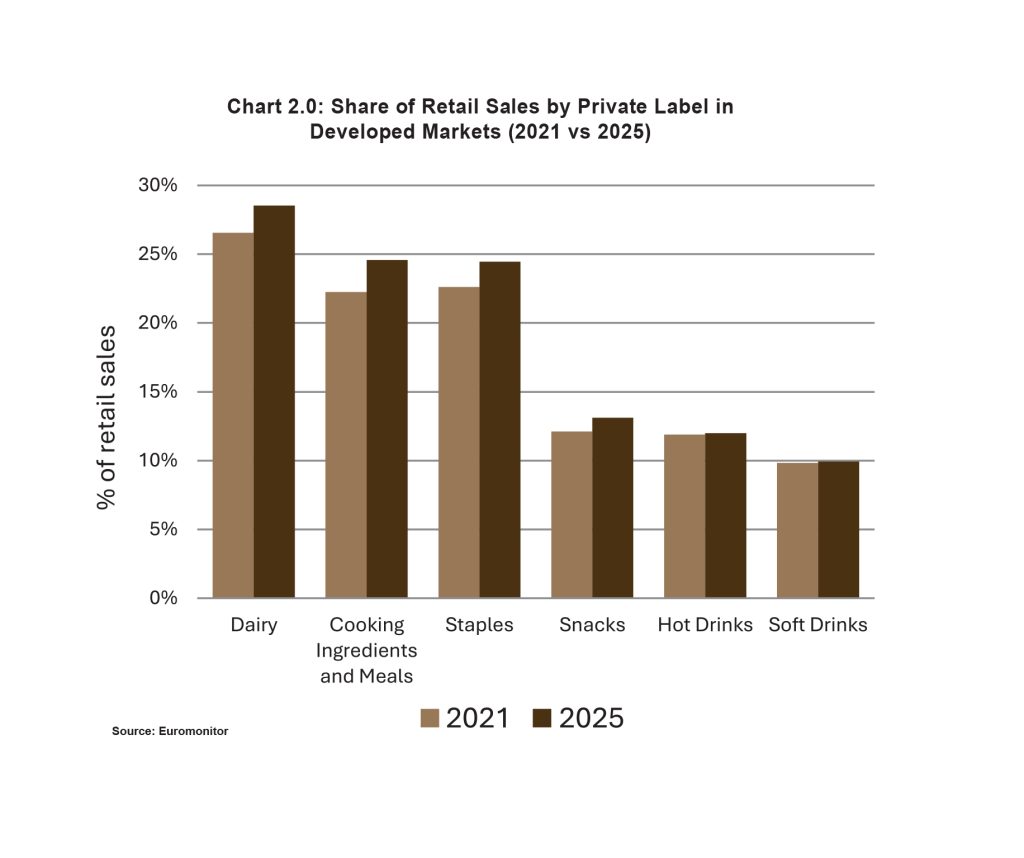
Euromonitor, in its recent report, highlighted that M&A and product innovation have slowed down, as companies are more selective on adding brands to their portfolio. While multinational brands are facing challenges, private labels witnessed rapid growth over the same period.
Rise in living cost has always been the primary concern of most consumers globally. As a result, price supersedes all other factors in decision making, although affordability balanced with reasonable quality of products are often viewed as the best combination to attract purchase. Private labels which are often attractively priced, see unprecedented growth in the cities and developed markets. According to Euromonitor, private label share in the dairy segment in developed markets have reached almost 30%, and they pose the greatest threat to branded food and drink products.
Meanwhile, food products like snacks, ice cream and confectionery manufactured by established brands are often labelled negatively by consumers as ‘ultra-processed’. Governments all over the world are also tightening their regulations on these products which might contain excessive salt, sugar and artificial flavoring, and implement new tax laws to discourage consumption.
These however open opportunities for niche and smaller market players to enter the market and offer unique functional food and beverage products to capture the consumer dollar.
