


An interesting research conducted by Kantar highlighted that 41% of Asian consumers tried to include plant-based proteins in their diets, as compared to just 27% globally.
In Asia, a higher number of consumers were very likely to try plant-based snacks (46%) compared to a lower proportion who were very likely to try plant-based milk (44%) and plant-based meat (40%). The findings clearly showed that the pick-up in the consumption of plant-based meat is yet to follow other plant-based alternatives in terms of consumer acceptance.
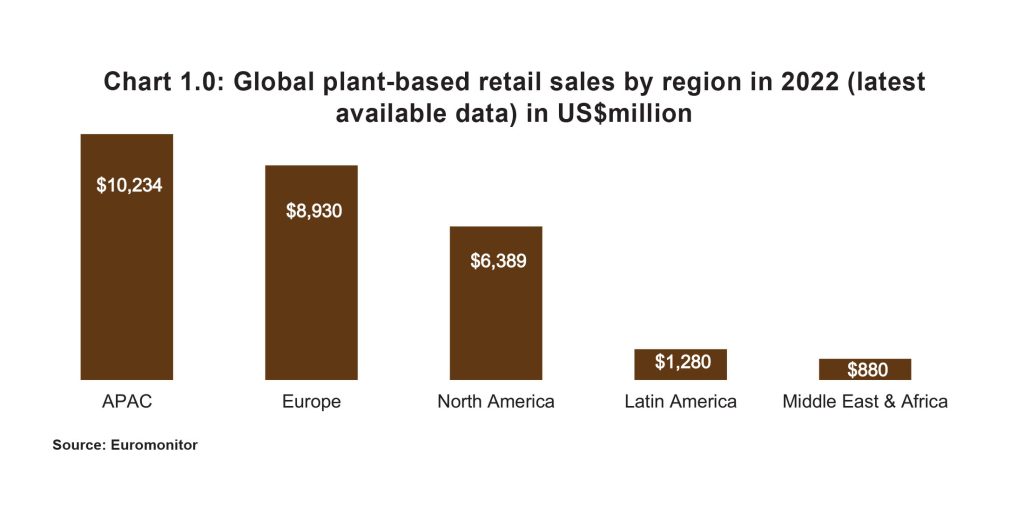
Nevertheless, the Asia Pacific (APAC) region holds the largest market for overall plant-based retail sales at US$10.23 billion compared to other regions in 2022 (see Chart 1.0).
Asia is arguably the original hub of plant-based innovation with heritage products like soy-based tempeh to soy milk and mushroom protein, and the region has also pioneered many delicious plant-based protein ingredients and dishes.
With emerging health and ecological concerns globally, there is renewed interest in plant-based diets and alternatives. Around 78% of consumers in Asia now believe that ‘living in more environmentally friendly ways’ can improve their health, while 80% of Asian consumers said they are ‘actively trying to improve their health’.
Consumer education in Asia is essential to build awareness of the relationship between plant-based protein consumption with living in a more environmental friendly way, while at the same time to establish this link with better health, which could boost consumption of plant-based protein in the longer run.
The current decade saw rising raw material costs of dairy milk, chocolate and coffee which indirectly have also pushed consumers to consider higher consumption of more affordable plant-based milk and beverages. As an example, plant-based milk brands that have built strong taste, texture, and nutrition credentials equivalent to their dairy milk competitors stand a good chance to build higher market shares in the future.
