


Meat is a staple diet of majority of the global population, however its production requires a lot of water and land, and is the leading contributor of greenhouse gas emission.
Scientists from China claimed to have successfully cultivated meat cells directly on grains of rice.
The research, which is still not published in peer-reviewed journals, was carried out by the China Meat Research Centre of the Beijing Academy of Food Sciences. The chief scientist of the project, Wang Shouwei, disclosed that meat cells of both chicken and pork have been embedded into rice grains, but are visually indistinguishable from each other. He said, “Once cooked, they release a combined aroma of both meat and rice.”
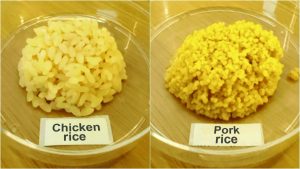
Wang mentioned the difference between his project and the mainstream cell-cultured artificial meat, as the latter is made using synthetic carriers that are very expensive and often raise food safety concerns. “Our project, on the other hand, utilised rice, a natural, edible alternative rich in fibre and other beneficial nutrients.”
According to a report, the rice is first pre-treated and then a layer of pork or chicken cells is grown on the grain’s surface. As a result, the dish that is produced has the smell of both rice and meat, and also comes with all nutritional requirements like carbohydrates, protein, minerals and vitamin. Wang added, “We can now precisely control the content of protein, fiber, amino acids and other nutrients, thereby allowing us to tailor-made these food products to meet certain dietary needs.”
The research team is optimistic of achieving mass production in the near future. Professor Zhou Jingwen, from Jiangnan University, sees the development as a significant leap forward. He said, “Chicken rice and pork rice represent a new frontier in cell-cultured meat research, and China is poised to be a leader in this field.”
The Chinese project however is not a pioneer in this new technique as earlier this year, South Korea’s Yonsei University also produced rice layered with beef cells wherein the grains of rice were coated with enzymes and fish gelatin, which would be the nutritional base for meat cells to grow.
